LibraryFoundational AI: Do's and Don'ts9 min read
What To Automate First, And What To Leave Alone
The right first automation is not your biggest time sink. It is the small task that quietly does not happen when everyone is busy, because that is where the money actually leaks.
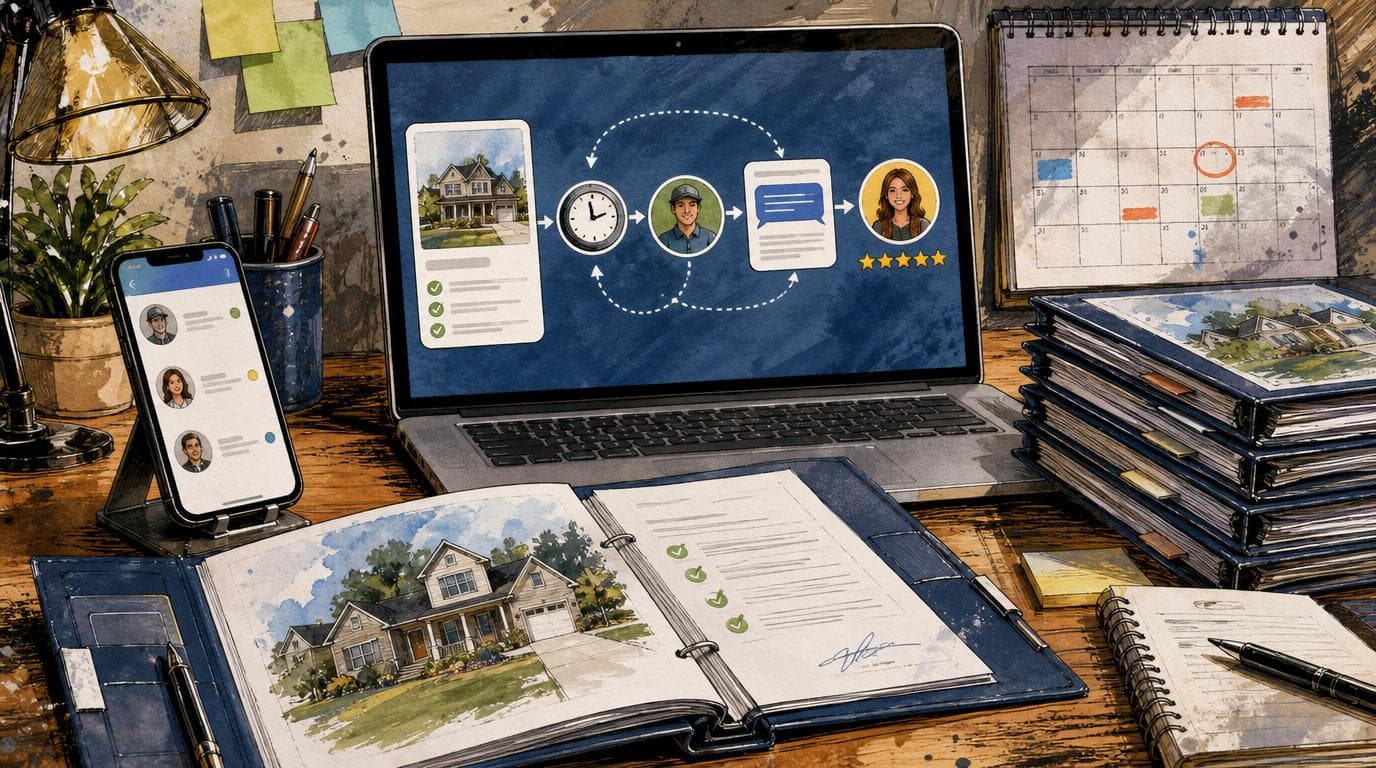
You have a list. Everybody at your stage has the list, written down somewhere or just running in the back of your head: the stuff you do over and over that a machine should probably be doing instead. Invoicing. Scheduling. Chasing people for paperwork. Copying numbers out of one system and into another. Somebody told you to automate, you agreed in principle, and now you are standing in front of the list trying to figure out where to start. So you reach for the biggest one. The task that eats the most hours. That is the obvious first move, and it is usually the wrong one.
Here is the answer, up front, because you are busy and this is the part that matters. Do not automate your biggest time sink first. Automate the task that fails silently. The small, frequent, low-judgment thing that simply does not happen when your team gets slammed, because that is where you are quietly losing money you never see leave.
The task you feel is not the task that costs you
Think about why your biggest time sink feels like your biggest time sink. It feels that way because you feel it. You spend the hours, the hours are visible, they show up in your day as the thing you were doing when you wanted to be doing something else. And because it is visible, you have almost certainly already built a defense around it. You do it at a set time. You batch it. You handed it to a specific person. It is annoying, but it is handled, and a handled task is a bad automation target, because the work of automating it buys you back hours you had already contained.
Now think about the other kind of task. The one that takes almost no time, because most of the time nobody does it at all. The quote that went out on Tuesday and needed a nudge on Friday, and Friday was chaos, so the nudge never went. The customer whose job you finished last week and who would happily leave you a five star review if anyone asked, and nobody asked. The service contract that lapsed because the reminder lived in one person's head and that person was on vacation. None of these show up on a time audit. They cannot, because a task nobody performs takes zero minutes. That is exactly why they are invisible, and exactly why they are the leak.
The follow-up is the cleanest example, and there is hard evidence for how expensive it is. Harvard Business Review ran a study years ago that audited how fast 2,241 companies responded to an inbound lead, and the results are the kind of thing that should keep an operator up at night. Twenty three percent of the companies never responded at all. Among the ones that did, the average response time was forty two hours. And the firms that answered within the first hour were nearly seven times more likely to qualify the lead than the ones who waited longer. Read that against your own shop. You paid for that lead. You paid for the ad, or the referral relationship, or the truck with your name on it that made the phone ring. The single most expensive thing you can do with a lead you already paid to generate is let it sit for two days because Friday got away from you. That is not a time problem. Nobody clocked hours failing to follow up. It is a money problem wearing the disguise of nothing happening.
Why silent failures make the best first automation
A first automation should clear three bars, and the silent-failure tasks clear all three almost by definition.
It should be high frequency. Something that happens many times a week, so the automation earns its keep constantly instead of sitting idle. Follow-ups, review requests, reminders, and rebooking nudges all fire constantly in any business with customers.
It should be low judgment. The task should be mostly rules, not gut. "If a quote has been open five days with no reply, send this message" is a rule a machine runs perfectly every time. "Decide whether this customer is worth keeping" is not, and you should keep your hands on it. The follow-up is the rule. The relationship is the judgment. Automate the rule, keep the judgment.
And its failure should be the kind you cannot see. This is the part everyone skips, and it is the whole point. When your biggest time sink fails, you notice immediately, because you are standing right there. When a follow-up fails, nothing happens, and nothing happening is the most expensive event in a small business precisely because it never gets reviewed. Putting a machine on the silent-failure task converts an invisible loss into a visible, running system. That is a much bigger swing than shaving twenty minutes off a chore you already had under control.
The cost of putting a machine on it has also fallen through the floor, which is what makes this the right conversation for 2026 and not 2019. A tool like Make will run the free tier at a thousand operations a month, and the paid plans start under ten dollars. A follow-up sequence that watches for open quotes and sends a nudge on day three and day seven is a few hundred of those operations. You are not buying an enterprise automation platform and a six month rollout. You are wiring one rule into a workflow for roughly the price of a couple of coffees, and the thing it protects is every deal you would otherwise have dropped on a busy Friday. That math was not available at this price a few years ago. It is now, and most operators have not repriced the decision.
What to leave alone
Triage is two lists, not one. The tasks you do not automate first are just as important, because chasing the wrong ones is how people end up with a pile of half working automations they do not trust.
Leave the rare stuff alone. Automating a task that runs once a month or once a quarter almost never pays, and worse, it rots between runs. Something upstream changes, a form gets a new field, a login expires, and the next time the automation fires three months later it fails quietly, which lands you right back in the exact failure mode you were trying to escape, except now you also believed you were covered. Rare plus automated is often worse than rare plus a calendar reminder to a human.
Leave the judgment alone. If the value of the task is the decision inside it, a machine that removes the decision has not helped you, it has just made a worse decision faster. Pricing a nonstandard job, deciding whether to fire a bad customer, reading whether a prospect is actually ready to buy: these are where your experience is the product. Automate the paperwork around them if you like, the reminder to make the decision, the gathering of the numbers you need. Do not automate the call itself.
And leave alone anything that is not stable yet. If your process for a thing changes every few weeks because you are still figuring out how you want it to work, automating it just freezes a version you are about to outgrow. Automation is for the parts of the business that have stopped moving. Let a process settle into a real shape by hand first, then put a machine on the shape.
The honest take
Here is where the silent-failure rule stops being clean, because it does have edges and you should know them before you go wire anything.
The first one is uncomfortable. When you automate a silent failure, you do not eliminate the silent failure, you move it up one level. The follow-ups now go out on their own, right up until the automation itself breaks. An account disconnects, an update changes a button, the message template gets a stray character, and now nothing is following up again and you are even less likely to notice than before, because you have stopped watching. You handed the job to a machine and mentally closed the ticket. So the discipline the automation actually requires is not building it, it is checking that it ran. One glance a week at "how many follow-ups went out" catches a dead automation in days instead of the quarter it would otherwise cost you. If you will not do that glance, you are not ready to automate the task, you are ready to feel like you did.
The second edge is that a follow-up automation can do real damage that doing nothing would not. A human who is behind on nudges is at worst slow. A machine that fires a tone deaf, obviously canned "just checking in" to a customer who already replied, or already bought, or already told you they were unhappy, actively burns the relationship. The rule you automate has to be smart enough to know when to shut up, and that condition, has this person already responded, is the part people leave out and then wonder why customers find the nudges insulting. Cheap to build does not mean thoughtless to build.
The third edge is the one that quietly invalidates the whole exercise if you skip it. Not every silent failure is costing you anything. Some tasks do not happen because they genuinely do not matter, and the fact that nobody misses them is the market telling you the truth. Before you automate a leak, you have to confirm it is actually leaking money and not just leaking activity. That takes a small amount of measurement you probably are not doing yet, which is the real reason automation triage is hard. You cannot triage what you do not track, and most operators are flying on the feeling of being busy, which points them straight back at the visible time sink and away from the invisible cost. The software regret data is a standing warning here: most small businesses who regret a purchase blame the rollout, not the product, and automating the wrong task confidently is just another way to buy something you will resent in a year.
None of that is a reason to stall. It is a reason to pick one silent failure, confirm it is real money, wire the one rule, and watch it for a month before you touch the next thing on the list.
What to do about it
Go back to your list, the one with the big obvious chores on it, and ignore it for a second. Instead, ask a different question: what is supposed to happen in my business that just quietly does not, when we get busy? The follow-up nobody sent. The review nobody asked for. The renewal nobody flagged. Write those down, pick the one you can prove is costing you deals, and put your first machine there. The task that wastes the most of your time is not the task that is costing you the most money, and until you have those two straight, you will keep automating the wrong end of the business.
Sources
Every claim above traces back to one of these. Go read them yourself.
- 01The Short Life of Online Sales Leads
Harvard Business Review / hbr.org / retrieved Jul 30, 2026
- 02Make pricing
Make / make.com / retrieved Jul 30, 2026
- 03
Suggested reading
Selected articles based on topic, tags, and skill focus across the library.
Foundational AI: Do's and Don'ts
Your Automations Are Logged In As A Person
The ops lead left in July and the Monday invoice chase stopped in August, quietly, with no error and no alert. The handover doc was never the deliverable. The list of what runs under their name was, and three of the four platforms you use will not tell you it exists.
AI News
Your email subscription just grew a webhook
Zapier puts webhooks behind its $19.99 Professional plan and counts every step your automation takes against a task allowance. On Monday the same outbound webhook, plus connectors to HubSpot, QuickBooks, Salesforce and Slack, started showing up inside Google Workspace with no second bill and no meter. The tier that can restrict where those webhooks point is not the tier most small businesses are on.
AI News
The workflow came prebuilt. Your data did not.
Anthropic shipped 43 ready-to-run small business workflows yesterday, including one that answers an after-hours web form, qualifies it, books it, and logs it. The connector counts underneath each one are the real story, and so is the input nobody mentions.