LibraryRepo of the day8 min read
What Onyx replaces: the sixty-thousand-dollar internal search contract
Onyx is an open-source AI assistant that answers questions from your own docs, tickets, and chat history. It does the job companies buy Glean for, and Glean starts at roughly a hundred seats and sixty grand a year.
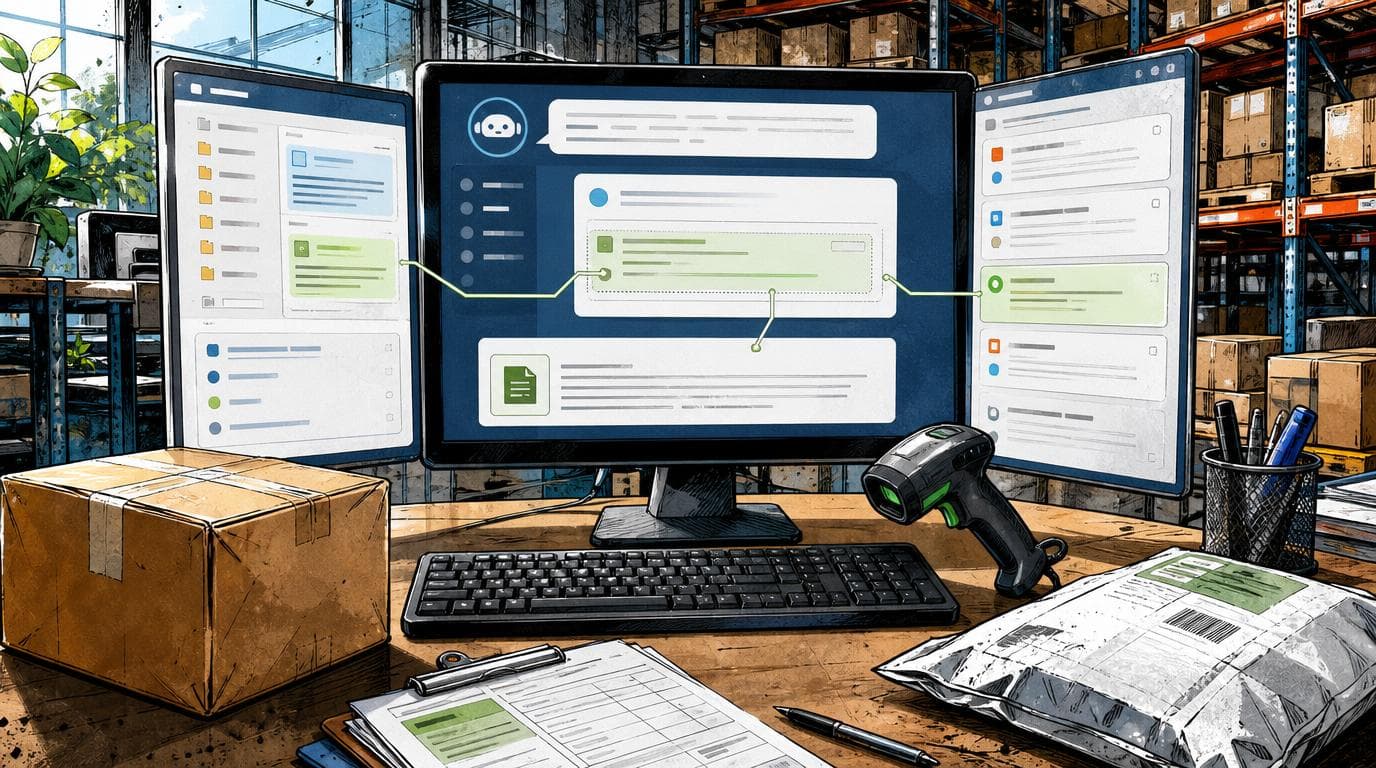
A distributor with ninety people has the same document three times. It is in a Google Drive folder somebody reorganized in the spring, it is pasted into a Slack thread from last quarter, and the newest version is an attachment on a Zendesk ticket nobody else can see. When a rep needs the current return policy, they ask in the team channel and wait, or they guess. Onyx is an open-source AI assistant that reads all three of those places, figures out which copy is current, and answers the question with a link back to the source. That is the exact job a company buys Glean to do, and Glean does not sell to a ninety-person distributor at a price that person would recognize as sane. It starts around a hundred seats and sixty thousand dollars a year.
What Onyx actually is
Onyx, which spent its first year under the name Danswer, is on GitHub at a little over thirty-one thousand stars, with more than nine thousand commits and a fresh stream of them landing every week. Strip away the category language and it is a chat interface that sits on top of whatever large language model you point it at, plus the part that matters: a retrieval layer that indexes your own material and feeds the relevant pieces to the model at answer time. The industry calls this RAG. Your reader does not need the acronym. What it means in practice is that the assistant answers from your handbook, your tickets, and your past decisions instead of from the open internet, and it shows its work with citations you can click.
It ships with more than fifty connectors out of the box, the usual suspects being Google Drive, Slack, Confluence, Notion, Zendesk, GitHub, and the file shares where policies actually live. You connect a source, it indexes on a schedule, and from then on the answer engine knows about it. On top of retrieval it does web search, code execution in a sandbox, document generation, and multi-step research runs, and it will drive external apps through actions and MCP if you want it to reach past reading and start doing. The team keeps a deep-research benchmark and, as of February 2026, put their own configuration at the top of it. Take that the way you take any vendor-run benchmark, which is to say it tells you they care about the number, not that the number is neutral.
The install story is genuinely short for the light version. One command, curl -fsSL https://onyx.app/install_onyx.sh | bash, and the Lite mode comes up in under a gigabyte of memory as a plain chat UI with agents. That is the demo you can stand up on a Tuesday to convince yourself it is real. It is not the thing that replaces Glean. The version that does, Standard mode, runs the full retrieval stack: a vector and keyword index, background workers that sync the connectors, and inference servers for the models that do the indexing. That is a heavier lift and an honest article has to say so before the cost section, not after.
Why a small operator should care
The reason this lands is the shape of the alternative. Glean does not publish a price, which is itself the tell. Every number in circulation comes from buyers and resellers rather than from a rate card, and they cluster in the same place: roughly forty-five to fifty dollars per user per month for the base search license, a further fifteen or so per user for the AI add-on that does the actual answering, and a floor of about a hundred seats before anyone will sign you. GoSearch's breakdown and Coworker's teardown both land near a sixty-thousand-dollar minimum annual commitment, with a paid proof of concept that can run into the tens of thousands before you have bought anything at all. For a mid-size deployment the total cost of ownership, once you count the infrastructure and the administration, is quoted in the hundreds of thousands.
Set that against the two readers who keep hitting this wall. The first is the ops lead at a company too small for Glean to bother with, who spends a real fraction of every week being a human search engine for everyone else. They know where the return policy lives because they are the institutional memory, and that is precisely the job that should not depend on one person being at their desk. The second is the RevOps or IT manager at a company big enough to have been quoted by Glean, who took the number to finance and watched it die. Both of them have been told the same thing: internal search that actually understands a question is an enterprise purchase, and the price is the price.
Onyx is the counterexample. The engine that does the retrieval and the answering is MIT licensed in its Community Edition, which is the most permissive license there is. You can run it commercially, modify it, and never speak to a salesperson. The displaced cost is not a subscription line, it is the whole contract, and for the smaller shop it is also the six-week ticket to engineering that was never going to get prioritized. A semi-technical ops person who can follow a Docker guide can stand up the thing their company was told to buy.
The honest take
Free is doing a lot of work in that last paragraph, and it is never the whole cost. Here is where it goes.
The setup is not the one-line install. Lite mode is, but Lite mode is a chat window, not an answer engine over your data. Standard mode is Docker Compose with a vector index, worker containers, and model inference servers, and getting your first connectors syncing cleanly is a job measured in hours, not minutes. Budget most of a day for someone comfortable with a terminal, and more if your Google Drive has the kind of permission sprawl that every real Google Drive has. This is squarely at the top of what our non-coding builder can do, which means it is doable and it is not casual.
Hosting is a monthly number, not zero. Standard mode wants real memory for the index and the workers, so you are looking at a virtual machine in the range of a few tens of dollars a month at the low end and more as your document count grows, plus the language model itself. Onyx brings no model. You point it at an API key, which means every answer is a metered call to Anthropic or OpenAI billed by the token, or you self-host a model with something like Ollama and pay for the bigger machine instead of the API. Neither path is free, and the token bill is the one that scales with how much your team actually uses the thing, which is to say it grows precisely when the tool is working.
There is a data question and it has a specific answer. Self-hosted, your documents stay on your infrastructure, which is the entire point for anyone in a regulated trade. But the model call is the exit. If you wired Onyx to a hosted provider, the relevant snippets of your internal documents travel to that provider inside the prompt on every answer. That is usually fine and it is occasionally a dealbreaker, and the only way to close it fully is to self-host the model too, which raises the hosting cost you were trying to avoid. Name it before you deploy, not after legal asks.
The license has a seam. The retrieval engine is MIT, but the features a larger organization reaches for next are not. Single sign-on through SAML, role-based access control on who can see which agent, usage analytics, query history for audit, and whitelabeling live in the Enterprise Edition, which is a paid, quote-based tier. For a ninety-person shop that seam may never matter. For the RevOps manager who escaped Glean, it is worth knowing that the moment you need SSO and access controls you are back in a sales conversation, just a much cheaper one, and one you can walk away from because the core keeps working without it.
And there is the maintenance question that hangs over every open-core project. Onyx is a venture-backed company, not a hobby, which is good for the pace of those nine thousand commits and a risk of its own. If the company changes direction, the MIT core is yours to fork, but forking means inheriting the upkeep of a retrieval stack you did not write. The commit history says that is not this year's problem. It does not say it is nobody's problem ever.
What does Glean give you for the sixty thousand that Onyx does not? Permission-aware search that reliably respects who is allowed to see what, at a scale and a polish that a self-hosted deployment has to earn connector by connector. A compliance package with the certifications an enterprise procurement team demands. A support line with an SLA behind it. If you are a bank, those are the product. If you are a distributor with ninety people and one overworked ops lead, they are features you are paying for and will never invoke, and that is the whole argument.
The decision you now own
The question was never whether an answer engine over your own documents is worth having. Everyone who has waited three days for a colleague to find a file already knows it is. The question the price tag used to answer for you, by putting the tool out of reach, is now yours again: is one honest day of setup and a metered model bill a fair trade for the thing your company was quoted a hundred seats and sixty grand to rent. For most operations under a couple hundred people, the number that used to end the conversation is now the reason to start it.
Sources
Every claim above traces back to one of these. Go read them yourself.
- 01onyx-dot-app/onyx on GitHub
Onyx / github.com / retrieved Jul 28, 2026
- 02Onyx LICENSE (MIT, Community Edition)
Onyx / github.com / retrieved Jul 28, 2026
- 03Onyx pricing and editions
Onyx / onyx.app / retrieved Jul 28, 2026
- 04Glean Pricing: Costs, TCO and Alternative Breakdown for 2026
Coworker AI / coworker.ai / retrieved Jul 28, 2026
- 05Glean Pricing Explained, and Why Buyers Want More Transparency
GoSearch / gosearch.ai / retrieved Jul 28, 2026
Related reading
Nearest neighbours by meaning, drawn from the whole library rather than from matching tags. Some of these are from a different series on purpose.
Repo of the day
Macro and the forty-dollar stack
Ten people on Superhuman and Linear alone costs $5,880 a year, and all it buys is an inbox and a task board. Macro does email, chat, docs, tasks, calls and CRM out of one app for $40 a seat, and it moved to the AGPL in May, which means the escape hatch is written into the license.
Operator answers
Your Software Just Added AI. Do You Pay For It?
Three renewals this quarter, three new AI lines, priced anywhere from twenty nine dollars flat to a hundred and twenty five per seat. Which ones to pay for has almost nothing to do with how good the AI is.
Repo of the day
Twenty and the data model you were renting
A ten-person sales team on Salesforce list pricing pays about $21,000 a year, and the thing they are actually renting is not the software. It is the shape of their own business. Twenty puts that shape in a repository you own, and it shipped four releases in two days.