
LibraryFoundational AI: Do's and Don'ts3 min read
Compare AI with the work it replaces
Before deciding whether AI helps with a task, compare it with the process you use today. Count the checking and rework in both versions.
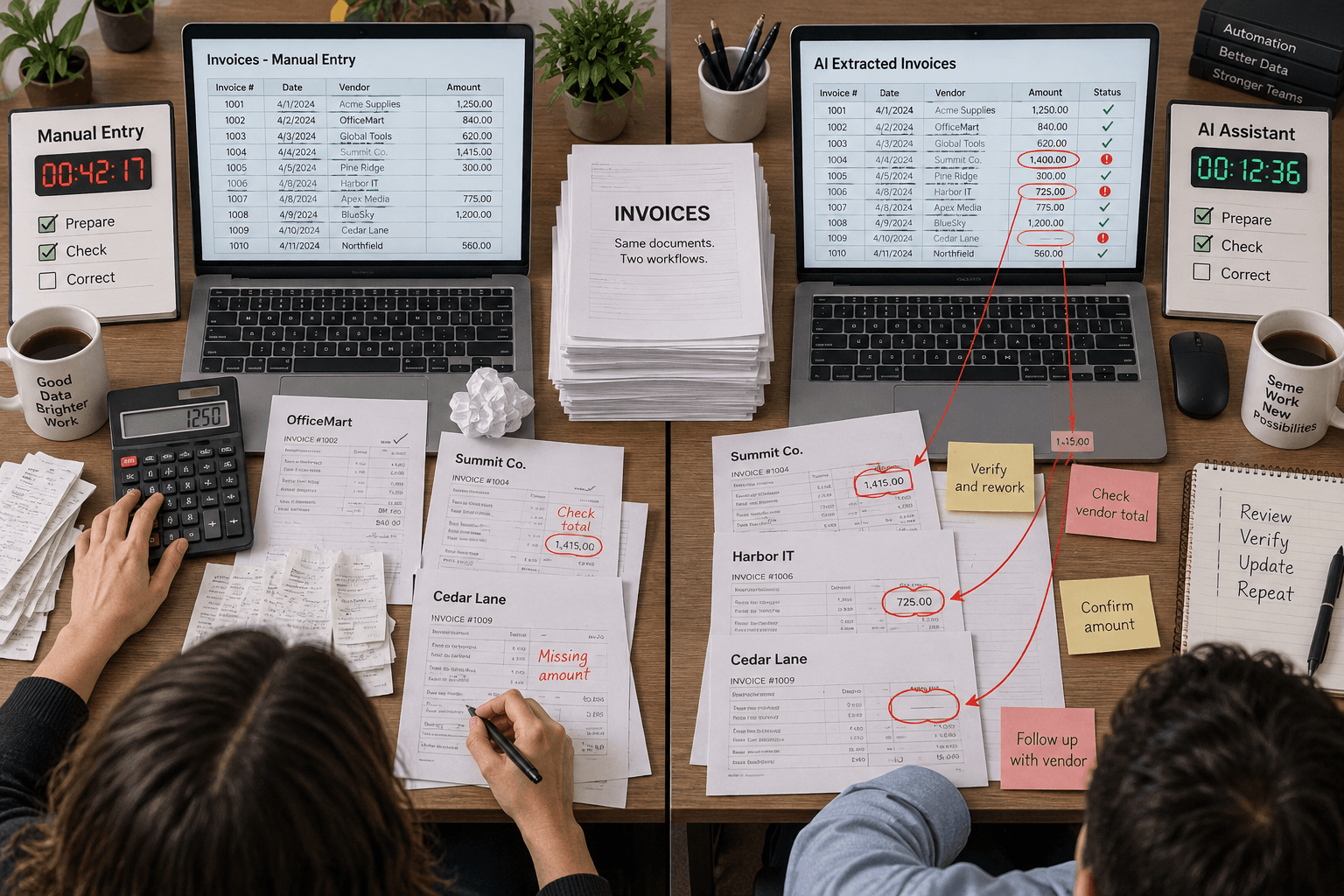
A draft that takes two minutes to generate can still make the task slower if it takes ten minutes to check. Before deciding AI helps, compare the whole job with the way you do it now. The named concept is a baseline comparison: keep the current process as the reference point, then look at what changes when AI is added.
NIST's measurement guidance says relevant human or other non-AI baselines help interpret AI performance. Its draft practices for language-model evaluation also recommend comparing against realistic alternatives, such as humans working alone or humans assisted by AI. That doesn't mean every small business needs a formal study. It means a result is hard to interpret if you don't know what you are comparing it with. NIST's measurement discussion explains why baselines matter.
Try it on one repeatable task
Pick a task that comes up often and whose output you can check, such as turning a routine internal update into a short summary. Avoid starting with sensitive or high-consequence work. Write down what a useful result must include and what would make it unusable.
For a few examples, record the current process:
- How long does the task take from start to usable finish?
- What steps does the person take?
- What mistakes or follow-up corrections happen?
Then run comparable examples with AI assistance. Use the same source material and the same success criteria. Count time spent preparing the request, reviewing the answer, correcting it, and handling anything the model could not complete. Keep the source and output so you can compare what changed.
Illustrative example: A manager currently spends about eight minutes turning a set of routine notes into a team update. An AI draft takes one minute to request, but needs six minutes of checking and editing. The AI version appears quicker by one minute on this example. That does not establish a reliable saving; the notes and edits may vary, and one run is too little evidence for a broad claim.
A simple prompt can help keep the comparison focused:
I’m preparing a short internal update from these notes. Use the same requirements as the current process: include the decision, owner, and next step, and do not add facts that are not in the notes. Draft the update and mark any missing detail. Do not send or save it anywhere.
The prompt is an illustrative starting point, not a tested recipe. The useful comparison is the total work and whether the output meets your stated requirements, not whether the response sounds polished.
Check what the comparison can tell you
Use several representative examples if you can. Note the task, inputs, date, process, time to usable output, corrections, and whether the result met the criteria. Include awkward cases, not only easy ones. If different people do the current task differently, say whose process you used; one person's timing may not represent the team.
Look at quality and effort together. A shorter task that omits a required detail may be worse. If the AI version needs more review, that review belongs in the comparison. If it handles routine cases but sends exceptions back to a person, count how often that happens and what the handoff requires.
This small exercise has limits. It won't prove that AI caused every difference, predict how it works across other tasks, or establish financial return. NIST notes that measurements depend on context and that results from controlled evaluations can differ from real-world use. Its draft evaluation practices also caution that baselines should reflect realistic alternatives. Treat a short comparison as a reason to investigate further, not as a guarantee.
If the AI-assisted process consistently meets the same requirements with less total effort, you have a reason to try it on a slightly broader set of low-risk examples. If the time or quality is similar, keep the existing process for now. If the work is higher stakes, the comparison should include the cost of errors and the person accountable for catching them. The decision is whether this specific task improved enough to justify changing how you do it.
Sources
Every claim above traces back to one of these. Go read them yourself.
- 01Accelerating AI Innovation Through Measurement Science
NIST / nist.gov / retrieved Nov 03, 2026
- 02Practices for Automated Benchmark Evaluations of Language Models
NIST / nvlpubs.nist.gov / retrieved Nov 03, 2026
Suggested reading
Selected articles based on topic, tags, and skill focus across the library.
Foundational AI: Do's and Don'ts
Make a decision table before asking AI to apply a rule
When a work rule depends on several conditions, map the combinations and their outcomes before asking AI to apply it. The table can expose gaps your prompt would otherwise hide.
Foundational AI: Do's and Don'ts
Separate what someone did from why you think they did it
AI can turn a late reply or missed deadline into a confident story about someone's intent. Keep the observed behavior separate from the explanation before it shapes a business decision.
Foundational AI: Do's and Don'ts
Audit HubSpot Customer Agent conversations, not just its score
HubSpot’s Customer Agent reports can show volume, resolution, handoffs, and coaching opportunities. Pair those metrics with a small, consistent review of actual conversations to judge answer quality.